What Campus Reviews Reveal
Politecnico di Milano’s Google rating (4.4, 1795 reviews) looks good on the surface, but some recent reviews reveal students’ true feelings about the campus experience. Buildings and infrastructure are common sources of dissatisfaction. A user who gave a 1-star rating, Blevins Patten, wrote: “A disastrous experience, to say the least, and a complete lack of respect for students. Calling this facility a ‘university’ is an insult to true academia. Let’s start with the infrastructure: the classrooms are dilapidated, ancient, depressing, and blatantly inadequate for a modern learning environ” Although the review is strongly worded, it reflects some students’ disappointment with the physical condition of teaching spaces. If you plan to rent near campus, classroom condition may not directly affect your housing choice, but commute time and campus distribution are more critical.
Another 3-star review from Darya Dugina points to teaching style: “Why do professors here try to overcomplicate simple subjects to the point where you lose points because you drew a short line instead of a dot in a drawing, and at the same time oversimplify things so much that you understand what the professor means in five minutes but are still forced to sit there” This suggests that engineering and design courses have strict detail requirements, which may mean you need to set aside ample quiet study time in your accommodation.
The most valuable reference is a 2-star review from Serhat Ardıç, who compared the two campuses: “Welcome to Milan! If you are a new international student at Polimi, a great way to kick off your university life is by visiting the Bovisa and Leonardo campuses. Personally, I find Leonardo far superior due to its greenery and central location. Seeing the blue ‘Benvenuti il Politecnico’ sign is an e…” Despite the low rating, the review directly points out the core difference between the two campuses—the main Leonardo campus (Piazza Leonardo da Vinci) is in central Milan, with plenty of greenery and convenient transport; the Bovisa campus is more industrial, quieter but with relatively limited surrounding amenities. This difference is a primary factor in determining housing priorities.
Milan’s Urban Background
Politecnico di Milano ranks 98th in the 2026 QS World University Rankings, and is the highest-ranked technical university in Italy. The main campus address is Piazza Leonardo da Vinci, 32, adjacent to Milan’s Città Studi university district, within walking distance of the Piola station on the green metro line (M2). Milan is Italy’s largest industrial and financial center, with a public transport network consisting of metro, trams, and buses covering a wide area.
For international students, the cost of living in Milan is above average in Europe; a single room rent is typically 500–900 EUR/month (2026–2027 academic year data, indicative — confirm with the operator), and sharing can reduce costs.
Since Polimi’s courses may be distributed across the Leonardo and Bovisa campuses (depending on the program), housing choices should prioritize the campus where classes are held, or choose an area with convenient transport between the two campuses. Milan’s M3 yellow line connects Bovisa to the central station, while the M2 green line covers the Leonardo area. Bovisa station (Passante railway and M3 yellow line) is about 20–25 minutes by metro from the Leonardo campus.
Budget Range
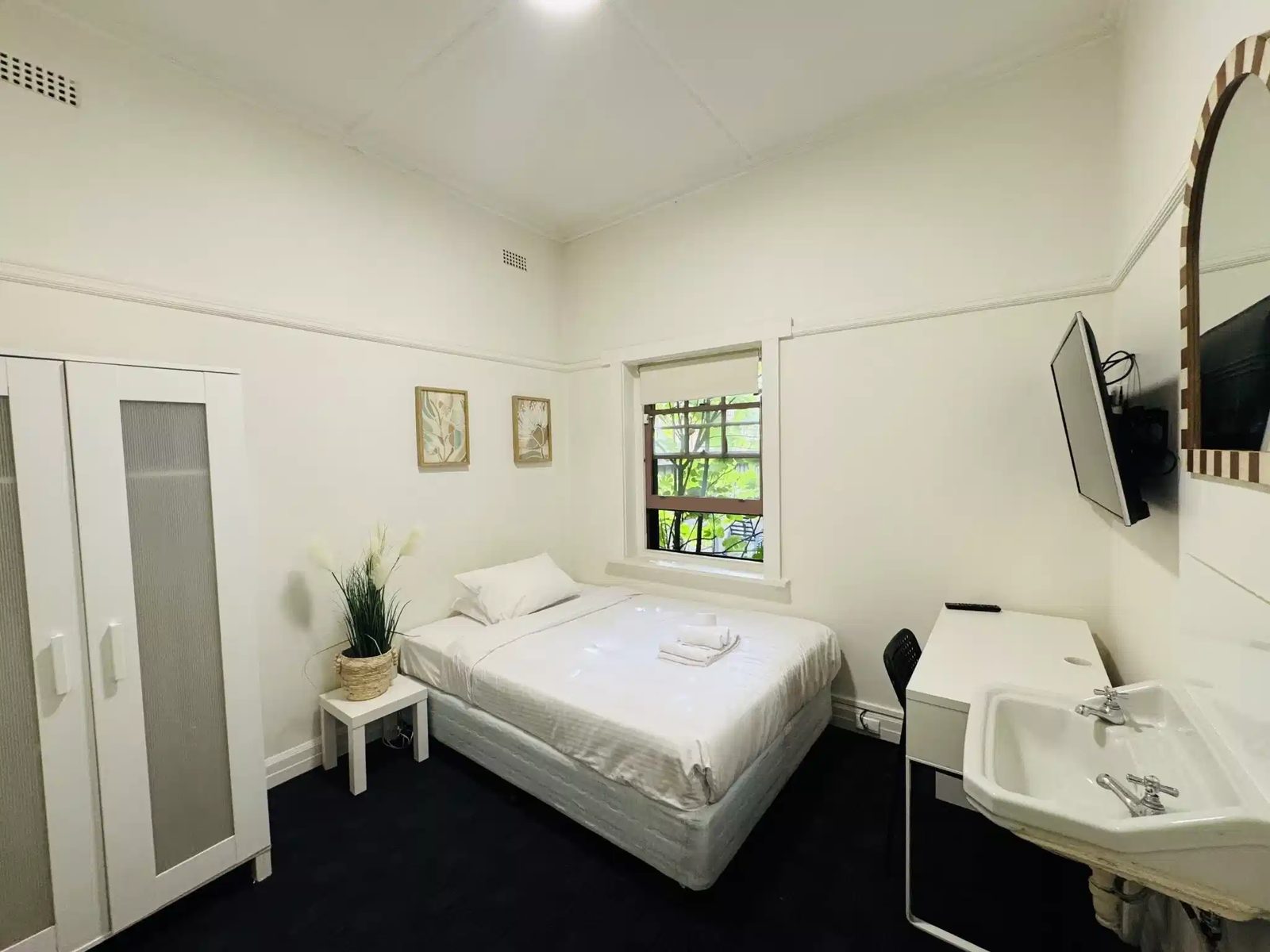
Below are typical budget ranges for student accommodation in Milan for the 2026–2027 academic year, prices are indicative — confirm with the operator:
- Shared room in a shared apartment: 450–700 EUR/month, usually includes utilities and internet. Common in Città Studi or Porta Romana areas.
- Private room in shared apartment: 550–900 EUR/month, depending on size and renovation level. Options for 500–750 EUR can be found near Bovisa.
- Studio / one-bedroom apartment: 800–1,300 EUR/month, difficult to find below 900 EUR near core campuses.
- Residence hall: 600–1,100 EUR/month, includes furniture, cleaning, and sometimes meals. Application needs to be submitted several months in advance.
Note: Milan municipality charges a registration fee (contratto di affitto registration), usually borne by the landlord, but it is recommended to confirm before signing. Also, the deposit is typically 3 months’ rent, which can be used to offset the last month’s bill.
Walking and Transport Trade-offs
Choosing to live within walking distance of campus saves time, but costs are usually higher. Around the Leonardo campus (e.g., Piazza Leonardo da Vinci, Viale Romagna, Via Ponzio), accommodation within a 5–10 minute walk typically has single room rents above 700 EUR. If the budget is limited, consider areas 15–20 minutes walk from the core (e.g., Lambrate or the edge of Città Studi), where prices can drop to 500–600 EUR.
The Bovisa campus is different: the area itself is not the busiest commercial district, but accommodation offers good value. Within a 10–15 minute walk, shared or single rooms can be found for 450–650 EUR. However, if most of your classes are at the Leonardo campus, daily round-trip commuting will take about 40–50 minutes (metro + walking). Recommended trade-off conditions:
- If most classes are at Leonardo, prioritize areas along the M2 green line (e.g., Piola, Loreto, Udine stations).
- If classes are mainly at Bovisa, then living near Bovisa station (within 10 minutes walk) or along the M3 yellow line (Zara, Maciachini stations) will save time.
Serhat Ardıç’s review mentions Leonardo campus’s ‘central location’ and ‘greenery’, indicating greater daily convenience. For grocery shopping, socializing, and other needs, living near Leonardo is obviously more convenient. But the cost is higher rent, and you need to adapt to the dilapidated classrooms—if you are sensitive to the ‘dilapidated’ environment mentioned by Blevins Patten, perhaps a spacious and comfortable home can better balance the negative experience.
Shortlist Logic for Nearby Accommodation
Since this article cannot list specific operators (to avoid brand promotion), the following provides a screening logic to help you compare available options on your own. You can use common housing aggregation platforms (note independent platforms, not official) to search for ‘Politecnico di Milano’ and filter by the following dimensions:
- Campus matching: When searching, confirm whether the listing’s ‘distance to Polimi’ refers to Leonardo or Bovisa. Some listings are close to Bovisa but far from Leonardo, and vice versa. It is recommended to input the coordinates of both campuses (near 25.0, 9.2).
- Transport nodes: Prioritize listings within an 8-minute walk from metro stations (M2 green line Piola, Loreto; M3 yellow line Zara, Maciachini). If classes are mixed, choosing near the central station (Stazione Centrale) provides access to both lines, but rent is slightly higher (single room 700–1,000 EUR).
- Budget anchor: Set an upper limit of 800 EUR/month (single room) or 1,000 EUR/month (studio). Be cautious with options beyond this range unless they include extra amenities (e.g., gym, cleaning services).
- Contract flexibility: International students typically need short-term contracts without a fixed term (4–12 months). Confirm if the landlord accepts ‘studente fuori sede’ (out-of-town student) status, and ask if they provide the contract required for residence registration (contratto registrato).
- Safety and convenience: The Città Studi area is generally safe, with streetlights and pedestrians even late at night. Around Bovisa, there are fewer people at night; it is recommended to choose listings near main roads or commercial areas (e.g., Dergano).
- Shared vs living alone: Living alone suits students like Darya Dugina who need quiet study; sharing is suitable for students who socialize frequently and want to split bills. Note: when sharing, confirm if flatmates are also Polimi students, otherwise differences in lifestyle may exacerbate your negative feelings about the classroom environment.
Shortlist example (hypothetical, only to illustrate logic, not a recommendation):
- Idea: First choice is a shared room in Città Studi (550–700 EUR), 10 minutes walk to Leonardo.
- Second choice: private room near Bovisa station (500–650 EUR), for students with main classes at Bovisa.
- Third: room along Loreto square (650–800 EUR), suitable for cross-campus commuting.
Before making a decision, confirm which campus your program is on. According to public course lists, most engineering programs are at Leonardo; design and architecture programs are partly at Bovisa. You can also log in to the university’s official website (domain not provided) to check the ‘Campus’ section. If the schedule is not yet released, it is recommended to first rent short-term (August–October) and then switch.
Frequently Asked Questions
How long does it usually take to walk from accommodation to the Leonardo campus?
In the core of Città Studi (e.g., Via Ponzio, Via Golgi), it is about a 5–15 minute walk. If you choose near Lambrate or Porta Venezia, it takes 20–30 minutes. It is recommended to test the route on a map; Milan’s sidewalks are in good condition, but slightly slower in winter rain or snow. All distances are indicative — confirm with the operator.
Is accommodation near the Bovisa campus cheaper? Is it suitable for students whose main campus is Leonardo?
Yes, single rooms around Bovisa are typically 50–150 EUR/month lower than in the Leonardo area. But if the main campus is Leonardo, the one-way commute is about 30 minutes (metro + walk), a daily round trip of 1 hour. If only a few classes per week are at Leonardo, it is worth considering. If courses are concentrated on one campus, it is recommended to prioritize the area around that campus.
When should I start looking for accommodation for the 2026–2027 academic year?
The Milan rental market is tightest from late August to early September due to the influx of international students. It is recommended to start searching online 2–3 months in advance (i.e., 6–7); for competitive core areas, contacting landlords in April–May can increase success. Contracts typically require a start date of September or October. All time points are indicative, subject to landlord confirmation.
Data date: February 2026
Explore more: Browse all student housing guides