Campus Reviews Reveal What
Shanghai Jiao Tong University (SJTU) ranks 47th in the 2026 QS World University Rankings and is one of China’s top research universities. Its main campus is located at Dongchuan Road, Minhang District, Shanghai, with a Google rating of 4.5 (174 reviews). Reviews from students and visitors reveal several key points: the campus environment and academic resources are highly praised, but international student entry policies and online course quality have sparked controversy.
Reviews from alumni are generally positive. An Indian PhD student (Dr Ali Khan) praised: “The best university in the world where you will find the best professors. The environment of the university is also very high.” He specifically mentioned his four-year doctoral experience in the School of Media and Communication as “wonderful” and said his advisor was very supportive. Another student from Mechanical Engineering (Ayan Bhattacharya) said: “An unbelievable experience of studying here at this research university. The school of Mechanical Engineering is currently ranked 9th in Asia and 19th in the World (QS Rankings). The infrastructure, study environment, culture, faculty & libraries are world class.” These reviews reflect student satisfaction with academic level, faculty, and facilities.
However, there were also negative voices. A user (NixArchives) gave 1 star, complaining that during the pandemic the school did not allow international students to return to campus but allowed business people and Koreans to enter China, considering it discrimination: “China won’t let international students back to campus. BUT they let business people and Koreans enter China… Is this not discrimination? The school’s online classes sucks, poor video and audio quality.” This review was posted 4 years ago, reflecting contradictions during a special period. A visitor (B. Razote) reminded that entering the campus requires a reservation or passport deposit: “Just a note, before entering, one must either secure a reservation in the school website or, tell the guards you just wanna roam around and you then have to let them take your passport (for identification) before entering.”
From these reviews, potential students can draw two conclusions: first, the academic environment and hardware facilities are world-class competitive; second, attention must be paid to the variability of the school’s international student policies and logistical support—these factors can affect your living experience locally.
Shanghai City Background and Student Life
Shanghai Jiao Tong University’s Minhang campus is located in Minhang District, southwest of Shanghai, about 30 km from the city center (People’s Square). This is a typical university town area, surrounded by several tech parks and residential zones. Overall living costs are lower than in the city center but higher than in China’s second- and third-tier cities.
Commuting Reference:
- Metro Line 5 Dongchuan Road Station is adjacent to the campus, with a transfer to Line 1 to reach the city center (about 50–60 minutes).
- Bus routes cover the campus periphery; taxi or ride-hailing to Hongqiao Hub takes about 40 minutes.
Living Amenities:
- On and near campus there are canteens, convenience stores, and small supermarkets; large shopping centers (e.g., Zhuanqiao Wanda, Longemont) require a metro or bus ride.
- Minhang District is primarily residential, with relatively affordable prices: a meal in the canteen is about 15–25 yuan, an off-campus casual meal 30–50 yuan.
Climate: Shanghai has hot and humid summers, cold and damp winters. When renting, confirm that air conditioning/heating is available.
Budget Range and Housing Options
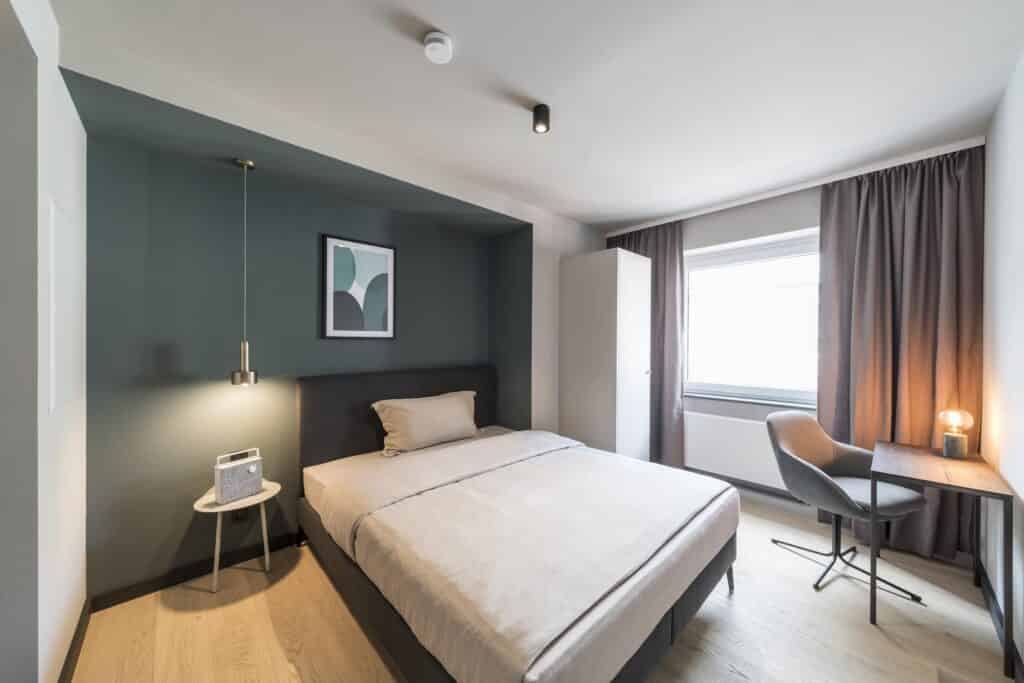
The following budgets are based on the 2026 rental market in Shanghai’s Minhang District; all prices are “indicative — confirm with the operator.” Unit: RMB/month.
Low Budget (1500–3000 yuan)
- On-campus dormitory (available for undergraduate and some graduate students): double or quadruple rooms, about 800–1500 yuan/month (including water, electricity, internet). Limited availability; apply through the school.
- Shared apartment secondary bedroom (off-campus neighborhoods, e.g., along Dongchuan Road, Jinping Road): shared single room about 2000–3000 yuan, shared bathroom and kitchen.
Medium Budget (3000–6000 yuan)
- One-bedroom or studio (within a 15-minute walk of campus): about 3500–5000 yuan, fully equipped. For example, older neighborhoods near Dongchuan Road metro station.
- Brand apartment single room (e.g., Mofang Apartment, V-Link, etc.): about 4000–5500 yuan, with private bathroom and basic furniture, but small area (20–30 sqm).
High Budget (6000 yuan and above)
- High-quality one-bedroom or two-bedroom (near campus or metro entrance): 6000–9000 yuan, nicely decorated, elevator, good property management.
- High-end serviced apartment (e.g., Zhangjiang or city center, not recommended for daily commuting): 9000 yuan and above, suitable for PhD students or visiting scholars with high living quality demands.
Tip: Rent usually does not include water, electricity, gas, and internet; budget an additional 500–1000 yuan/month. Deposit is typically two months’ rent; confirm contract terms before signing.
The Trade-off Between Walking and Commuting
When choosing accommodation, weigh “walkable distance” against “metro commute.”
Walk First (0–1.5 km):
- Advantages: time-saving (saves 30–60 minutes daily commuting), flexible, reduces transportation costs. Suitable for students with many morning classes or needing frequent trips to the lab.
- Disadvantages: limited choice, many older neighborhoods, rent may be slightly higher (due to proximity to campus). Living amenities may be less abundant than around metro stations.
- Typical areas: along Dongchuan Road, Cangyuan Road, Yongde Road. Within a 10-minute walk to teaching buildings.
Rail Transit First (along Metro Line 5 or Line 15):
- Advantages: significantly more housing options, rent may be lower (prices decrease farther from campus). Also covers areas with more commercial facilities like Minhang Town, Zhuanqiao, Xinzhuang.
- Disadvantages: one-way commute 20–40 minutes (from neighborhood to metro station + metro + walk to classroom), morning rush hour is crowded. Need extra budget for metro monthly pass (about 200–300 yuan/month).
- Note: Line 5 Dongchuan Road Station has intervals of about 5–8 minutes during morning peak, but carriages are older; Line 15 goes directly to Zizhu Hi-Tech Park but requires a transfer.
Balance Point: Most students choose a distance of one to three metro stops (e.g., Jinping Road Station to Dongchuan Road Station is only 2 stops), maintaining relatively low rent while reaching campus within 15 minutes.
Shortlist Logic for Screening Accommodation
Although this article does not provide specific apartment names, you can narrow down your options using the following logic:
- Determine your priorities: Dense academic schedule or frequent lab visits → walk first; limited budget or preference for more space → transit first.
- Define the transport corridor: Focus on areas around Dongchuan Road Station, Jinping Road Station, Huaning Road Station on Metro Line 5; or Zizhu Hi-Tech Park Station on Line 15 (near the east gate of Minhang campus).
- Set a budget cap: Keep rent within 30% of disposable income (e.g., if monthly living expenses are 7000 yuan, rent should not exceed 2100 yuan).
- On-site inspection or virtual viewing: Check room orientation, soundproofing, water heater stability. Ask senior students about neighborhood reviews (e.g., old decoration in Cangyuan community, shared tenancy disputes in Jindu Huajie, etc.).
- Review contract details: Deposit refund conditions, minimum lease term, whether subletting is allowed. Some landlords require international students to lease for one year or pay an additional deposit.
- Use school resources: Shanghai Jiao Tong University typically publishes off-campus rental information before the start of the semester, or you can find roommates through campus forums. Avoid paying high service fees through unverified agents.
Remember, there is no “best” option, only the combination that best suits you. Housing around the Minhang campus is in high demand during the start-of-semester period (August–September); it is advisable to start looking at least one month in advance. Confirm all price information with the operator before deciding.
Frequently Asked Questions
Can international students live off campus? What are the considerations?
Yes, international students are free to choose off-campus housing, but they are responsible for the rental procedures. Considerations include: registering temporary accommodation (register at the local police station within 24 hours of moving in), confirm the landlord’s identity and property deed before signing the contract, use Alipay or bank transfer to pay rent and retain receipts. Some high-end residential compounds may require foreigners to provide a work visa or long-term residence permit; a student visa is usually acceptable but requires the landlord’s consent.
Is the area around the Minhang campus safe?
Minhang District is generally safe, with adequate street lighting and patrol security around the campus at night. Common safety issues are bicycle theft and online fraud; it is recommended to use a U-lock and avoid walking alone in remote areas late at night. In an emergency, call 110 (in Chinese); the International Student Office also provides a 24-hour assistance phone number.
Do I need to buy furniture when renting off campus?
Most ordinary community rentals are “nicely decorated and fully equipped” or “simply decorated,” usually including bed, desk and chair, refrigerator, washing machine, air conditioner. However, items such as mattresses, curtains, and kitchenware may need to be purchased separately. Brand apartments are generally fully equipped and move-in ready. It is advisable to confirm the furniture inventory with the landlord and take photos as evidence before signing the contract to avoid disputes when moving out.
The data in this article is based on Shanghai Jiao Tong University’s 2026 QS ranking and Google reviews; rental prices are indicative figures from market research. Actual costs should be confirmed with the landlord or operator. Article published in January 2026.
Explore more: Browse all student housing guides