What Campus Reviews Reveal
Leipzig University is located in the city center, and its rating on Google by students and visitors is 4.5 stars (out of 760 reviews), with most reviews emphasizing the convenience brought by its central location. One review from Kien Nguyen says: “The view of the university and the street is so beautiful. If there was no covid19 epidemic, I would have come here for the second time to train more knowledge!” Although the epidemic interrupted the plan, the visual environment and academic atmosphere of the campus left a deep impression. Another review from Alexandr Orlov describes the breadth of the university’s disciplines in detail: “This university has a lot of faculties of completely different directions, both humanitarian and exact sciences. As expected to be found among others like economics and law, and unexpected, like veterinary and theological. By the way, German chancellor Angela Merkel also studied here.” This indirectly shows that Leipzig University is a comprehensive university with a diverse student body, and the demand for housing varies—some people need a quiet study environment, while others value social life and convenience.
Muhammad Atique’s review directly relates to daily convenience: “At the heart of the city centre and easily accessible. Starbucks and Backwerk is around the corner where you can sit for hours.” The campus is close to commercial facilities, meaning students can walk to cafes, bakeries, supermarkets, etc. Adil Primaputra adds: “Beautiful campus in the city centre. Very easy to find access to everything else in the city via transportation or just plain walking. The location is great for student who’s city person.” Walking and public transportation are both convenient, which is a core consideration for those choosing nearby housing — living in the city centre means walking to class, but may also face higher rent and more noise; living in a slightly farther area requires weighing commuting time.
Leipzig City Background
Leipzig is the largest city in the German state of Saxony, known for its music (Bach once worked here), trade fairs, and vibrant student culture. The city has a population of about 60, with a significant proportion of students (Leipzig University and Leipzig University of Applied Sciences together have over 4 students). The cost of living is lower than in major German cities such as Munich or Frankfurt, but rents have been rising in recent years. The city center revolves around Augustusplatz, where the main building of Leipzig University is located. Urban transport is covered by S-Bahn, trams, and bus networks, with trams reaching every corner of the city. For international students, Leipzig offers a relatively friendly language environment (many young people and service staff speak English), but it is still advisable to learn basic German to facilitate renting an apartment and daily communication.
In terms of the rental market, Leipzig offers both historic Altbau (old building) apartments with high ceilings and post-war Plattenbau (prefabricated panel buildings) as well as student dormitories. Since the university does not have centralized on-campus housing (a small number of dormitories are managed by Studentenwerk Leipzig), most students need to find private housing. Common living arrangements include WG (shared apartments, each person has their own room with shared kitchen and bathroom), single apartments (Einzelapartment), and family-style housing. Because the university is spread across multiple campuses in the city center (main campus, medical school campus, etc.), students from different faculties may need to choose different areas. This guide mainly focuses on housing near the main campus (Augustusplatz).
Budget Band
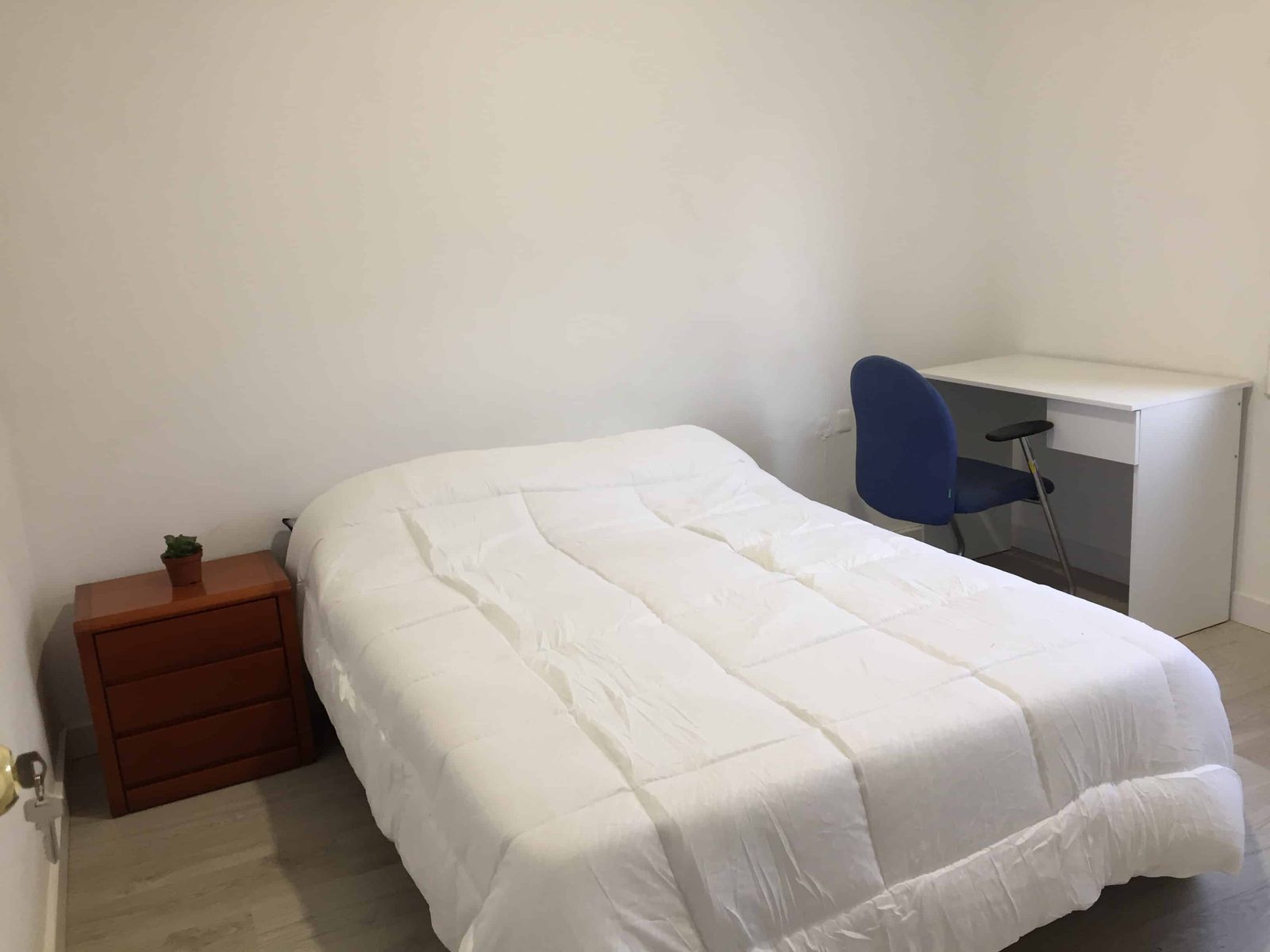
Leipzig’s rent level is moderately low in Germany, but has been rising year by year. Below is the approximate range for the year 2026‑2027 (all prices are indicative; please confirm actual fees with the operator):
- Shared Flat (WG-Zimmer): Monthly warm rent (including utilities, electricity, and heating) about 250–400 euros. This is the most common form of student housing, with room sizes of 12–20 square meters and shared kitchen and bathroom. In the city center (Innenstadt), WG prices are usually at the upper end, while in surrounding districts (such as Südvorstadt, Plagwitz) they can be as low as 250–300 euros.
- Single Apartment (Einzelapartment): Monthly warm rent about 350–600 euros. Size 20–35 square meters, with private kitchen and bathroom. New or renovated apartments are more expensive, while older buildings are somewhat cheaper. Starting rent for a single apartment in the city center is about 450 euros.
- Student Dormitory: Provided by Studentenwerk or private operators, monthly warm rent about 200–400 euros (depending on facility type, such as single room, double room, apartment). Dormitories are usually conveniently located, fully furnished, and include internet, but waiting lists can be long (apply 3–6 months in advance).
- Whole Apartment (Entire Rent): Suitable for couples or families, monthly warm rent about 500–900 euros (50–70 square meters).
Note: The difference between cold and warm rent is about 70–120 euros for incidental costs. Some properties also require a one-time deposit (usually 2–3 months of cold rent). Internet costs are usually extra, about 20–40 euros/month.
Walking or Transportation – A Trade-off
From Leipzig University’s main campus (Augustusplatz 10), a walking radius of 15 minutes covers a wide range of housing options. Comments mention “at the heart of the city centre” and “easily accessible”, meaning that if you live in the old town (Altstadt) or the part of Südvorstadt close to the city centre, you only need to walk 10–20 minutes to reach the classroom every day. The advantages are zero commuting costs, flexible scheduling, and the ability to go to the library or cafeteria anytime. The disadvantages are higher rents in the city centre and possible noise at night (bars, tram sounds). If you are sensitive to noise while sleeping, you may need to choose a rear-facing apartment or a higher floor.
If you choose to live in an area 2–5 kilometers from the main campus (such as Plagwitz, Connewitz, Gohlis), you will need to use public transport. The Leipzig tram lines (e.g., lines 1, 2, 3, 4, 7, 8, 9, 11, 14, 15) all pass through the city center. From Plagwitz to Augustusplatz takes about 15–20 minutes, and a monthly pass (Deutschlandticket, estimated 2026 49–58 euros/month) covers public transport throughout Germany. The advantage of living a bit farther out is lower rent, a quieter neighborhood, and more green space (e.g., near Clara-Zetkin-Park). The trade-offs are monthly commuting time and ticket costs, as well as missing out on some spontaneous events (reduced service after evening hours). Cycling is also a popular option—Leipzig is flat, with a well-developed bike path network, and the ride from the outskirts to the city center typically takes 15–25 minutes at no extra cost.
Combined suggestion: In your first year as a new student, you may want to prioritize shared apartments within walking distance, then adjust your location based on your course schedule and social circle once you are more familiar with the area. Students in engineering or natural sciences may need to attend classes in the southern part of Leipzig (such as the Permoserstraße campus), in which case it would be more suitable to live near that area rather than around Augustusplatz.
How to filter housing – Shortlist logic
Without specific apartment listing data, you can build your own shortlist under the following framework. Whenever you view a property, evaluate it according to these four dimensions:
- Distance to main campus: If most of your courses are at Augustusplatz, choose an area within walking distance (≤1.5 km) or direct tram access (≤4 stops). If departments are scattered, choose a location near a major transport hub (e.g., Hauptbahnhof or Wilhelm-Leuschner-Platz).
- Budget: First determine the highest warm rent you can afford. Start by comparing shared apartments, as the price range is wide and usually includes utilities. For single apartments, electricity costs must be calculated separately (electricity prices may adjust annually).
- Surrounding facilities: Reviews frequently mention cafés, supermarkets (Rewe, Aldi), bakeries (Backwerk), etc. Check if there is a supermarket, pharmacy, and bus stop within 500 meters of the property. Optional facilities to consider: laundry room, bicycle storage, garbage disposal.
- Lease conditions: Is furniture provided (möbliert or unmöbliert)? Is the minimum rental period 6 or 12 months? Are pets allowed? What is the deposit ratio? Note: German leases are usually indefinite, but short-term rentals for students are often 1 years.
Combining review information: If you appreciate campus scenery like Kien Nguyen, you can prioritize apartments with balconies or windows facing Augustusplatz or the park; if you like to sit in cafes for hours like Muhammad Atique, then choose an area within a 5-minute walk from Starbuck or Backwerk. At the same time, pay attention to the disciplinary diversity mentioned by Alex Orlov—if you study veterinary or theology, the campus may be different, and you need to additionally verify the classroom location.
Frequently Asked Questions
Q: What are the most popular residential areas for students near Leipzig University?
Answer: Südvorstadt and Plagwitz are two popular choices. Südvorstadt is close to the main campus (about 15–20 minutes on foot), with many bars, organic food stores, and student hangouts. Plagwitz in the southwest is a former industrial conversion area, with many loft-style apartments and rents about 10–20% lower than the city center, with a tram ride to Augustusplatz taking about 12 minutes. Gohlis (north) and Connewitz (south) are suitable for students who prefer a quieter atmosphere. All areas have shared apartments and single apartments available.
Q: How far in advance should I start looking for a place? Do I need to see it in person?
Answer: It is recommended to start searching 2–3 months before arrival. The rental market in Germany is highly competitive, especially during peak demand before the winter semester (10). Online platforms (such as WG-Gesucht, ImmobilienScout24) are the main channels. Visiting apartments in person helps assess the surrounding environment, noise levels, and the landlord’s character, but short-term visiting students can view apartments via video. Universities and Studentenwerk sometimes offer emergency accommodation or short-term transitional housing (Note: This article does not cite specific website domain names). Before paying a deposit, be sure to sign a formal lease and confirm the condition report (Übergabeprotokoll).
Q: When renting in Leipzig, what additional costs besides rent need to be noted?
Answer: Apart from the water, heating, and property management fees already covered by the warm rent, you often need to pay electricity fees (choose your own provider, about 25–50 EUR/month), internet fees (about 20–40 EUR/month), and broadcasting fees (Rundfunkbeitrag, 2026 about 18.36 EUR/month, per household). Some shared apartments also require payment for additional cleaning supplies or a common fund (Haushaltskasse). Additionally, the rental deposit usually cannot exceed three months’ cold rent and must be deposited into a separate escrow account, which is refunded if there is no damage after moving out. Private insurance (such as third-party liability insurance, home contents insurance) is not mandatory, but it is strongly recommended (annual fee about 30–80 EUR).
Data as of 2026 — housing market conditions can change; always verify current prices and availability directly with the operator or landlord.
Explore more: Browse all student housing guides