What Campus Reviews Reveal
The University of California, Riverside (UCR) has an overall rating of 4.4 on Google (from 876 reviews), reflecting the diversity of student experiences. Reading real reviews can help future renters understand the potential benefits and risks of living near campus.
Positives: International Atmosphere and Campus Environment
Michael Rachid (5 stars, 7 years ago) wrote: “This is a great university with students from all around the world, very beautiful buildings, gardens and sport facilities. It was a fantastic experience to study there for an year and enjoy such a nice atmosphere.” This review highlights UCR’s international community and beautiful facilities, especially suitable for students seeking campus social life and quality of living. J Mc (5 stars, 5 years ago) added: “The University Is awesome and also is huge, I cannot believe how Big this place is, My wife and I went to the Botanical Gardens it was beautiful.” The botanical gardens on campus are an extra bonus.
Negatives and Warnings: Safety and Animal Welfare Issues
Megan S. (1 star, 4 months ago) pointed out “ANIMAL WELFARE ISSUES at Riverside” and cited a specific violation report number and date (month 8 day 19, year 2025). For students concerned about animal ethics, this may impact trust in the university’s operations. Rick T (3 stars, 1 month ago) mentioned the catalytic converter theft incident: “Catalytic Converter on my truck got stolen… please be vigilant, if you see strange people looking under the car or truck and has saw to remove the catalytic converter call the police right away. 5/13/26 when my catalytic converter got stolen.” This indicates that vehicles near campus and residents face theft risk; parking security is an important factor to consider.
Overall Takeaways: The campus itself has quality facilities and diverse culture, but off-campus safety (especially vehicle-related crime) requires vigilance. When choosing housing, it is recommended to prioritize areas with secured parking lots or adequate street lighting.
Overview of the City of Riverside
Riverside is located in Southern California, about 60 miles from Los Angeles, in the Inland Empire region. The climate is hot and dry, with summer temperatures reaching above 38°C and mild winters. The city is medium-sized, with public transportation mainly consisting of RTA buses, but coverage density and frequency cannot compare to downtown Los Angeles.
In terms of cost of living, according to the provided data, the student apartment GrandMarc At University Village near campus starts at about $1,129 per month (indicative — confirm with the operator). This price is mid-to-high for the local area. Riverside’s overall median rent is lower than Los Angeles, but has risen in recent years due to growing student demand. Sharing an apartment or house can usually reduce personal expenses to $800–$1,000, while a single apartment or studio often costs $1,200 or more.
UCR is located on the east side of the city, with the main gate near the intersection of University Avenue and Canyon Crest Drive. Around campus there are fast food restaurants, supermarkets, and cafes, but large shopping centers require a drive. Nightlife options are limited, and most students rely on cars to go to Los Angeles, Orange County, or San Diego on weekends.
Budget Ranges
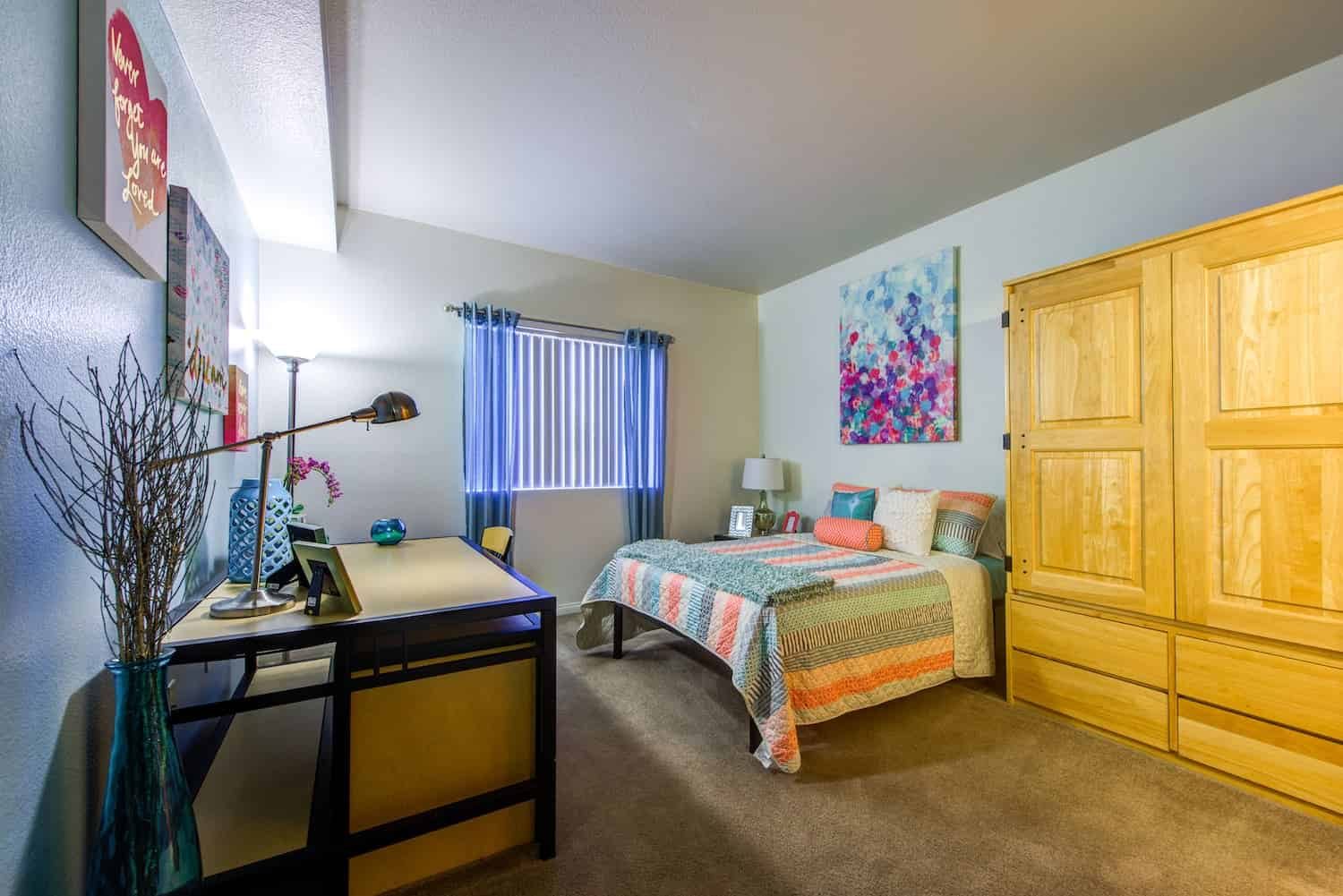
Using $1,129 as a reference baseline, three budget ranges can be defined based on financial capacity:
- Economy ($800–$1,100): Typically sharing a house or older apartment with 2–4 people, located a 20-minute walk or more from campus or requiring a bus. These units may lack air conditioning or come with furniture, requiring you to furnish yourself. Pay attention to safety: check if there is street surveillance and if theft is frequent.
- Comfort ($1,100–$1,400): Corresponds to large student apartments like GrandMarc At University Village, including furniture, gym, swimming pool, etc., about 10–15 minutes walk to campus. Utilities may be included or extra. Suitable for students who want to reduce commute time and value community social life.
- Premium ($1,400+): A single studio or a master suite with private bathroom, located in newer complexes on the west side of campus or in the Canyon Crest neighborhood. High rent but good privacy, parking usually guaranteed.
Note: All prices are indicative — confirm with the operator. Actual rent varies by lease term, room type, and signing time; it is advisable to compare current quotes in advance.
Trade-off Between Walking and Transportation
Walking Convenience: UCR campus is compact, with main teaching buildings, library, and student activity center concentrated in the central area. From GrandMarc At University Village, it is about a 10-minute walk to the central teaching building. Choosing to walk means no hassle of finding parking and avoiding the risk of vehicle theft (refer to Rick T’s review). However, dining options within walking distance are limited, and walking alone late at night requires caution.
Risks of Relying on a Car: Michael Rachid mentioned ‘just be aware that you need a car to travel in weekends, for Riverside itself does no’ (original text incomplete, meaning Riverside itself lacks entertainment). A car does expand the range of activities, but the catalytic converter theft incident warns car owners to purchase a shield device or park in a closed garage. Daily commuter parking permits cost about $300–$500 per year, and campus parking lots are sometimes full.
Intermediate Options: Bus and Cycling: RTA buses serve UCR station and surrounding communities, with a one-way fare of about $2, but intervals of 20–30 minutes. Bicycles are a good option for on-campus commuting; there are multiple bike racks on campus, but night riding requires lights. Note: Riverside’s summer heat is not cycling-friendly, and some roads lack dedicated bike lanes.
Trade-off Recommendations: First-year students can prioritize housing within a 15-minute walk (such as GrandMarc or Canyon Crest apartments) to reduce dependence on cars. If budget is limited, then accept bus or bicycle and allow extra time.
Shortlist Logic: Nearby Housing Options
Based on the example ‘GrandMarc At University Village’, here is a general logic for evaluating similar apartments to help you filter on your own:
- Distance and Safety: Prefer projects located along University Avenue or Canyon Crest Drive, within 1 mile walking distance to the main campus entrance. Check if the apartment has access control, 24-hour staff, security cameras, and fencing. Given Rick T’s review, enclosed parking is a plus.
- Lease Terms: Student apartments are usually rented by bed (not entire unit), with lease terms aligned to academic quarters (9 months or 12 months). GrandMarc allows individual contracts, avoiding the hassle of finding roommates. Confirm whether international students without US credit history are accepted; may require advance deposit or a guarantor.
- Fee Transparency: In addition to rent, ask whether water, electricity, and internet are included. GrandMarc-type apartments typically include some utilities. Also confirm whether there are additional application fees, management fees, or parking fees.
- Facilities and Social Life: Swimming pool, gym, and common study rooms are common selling points. GrandMarc also offers community activities, helping new students build social circles. However, higher rent means budget-strapped students need to weigh necessity.
- Alternative Options: University Village south of campus is within walking distance, but units are older; near Canyon Crest Towne Centre west of campus there are multi-family houses at lower prices but may require a car.
The final shortlist should include 2–4 options that have been viewed in person or via video, and directly confirm with property management for the 2026/2027 academic year’s prices, availability, and policies.
Frequently Asked Questions
Do I have to own a car to live near UCR?
Not necessarily. If you choose an apartment within walking distance (such as GrandMarc At University Village), you do not need a car for daily classes and meals. However, weekend shopping or outings will be limited. It is recommended to share housing with a car-owning classmate or join a campus carpool community. If you choose a distant but cheaper housing, a car is strongly recommended, and be aware of parking safety.
Is it safe around campus? How to reduce risk?
The campus itself has a good safety record, but the surrounding community occasionally has theft and property crime. The catalytic converter theft mentioned in the review is not an isolated case. Suggestions:
- Choose apartments with monitored parking lots or garages.
- Do not leave visible items in the car, install anti-theft shields.
- Try to walk with others late at night or use campus safety escort services (such as UCR’s Campus Safety Escort).
- Check local crime maps (such as the Riverside Police Department’s online report).
Which is more cost-effective: student apartments or regular off-campus apartments?
Student apartments (such as GrandMarc) are usually rented by room, with shared utilities and bundled fees simplifying the budget. However, the per-person cost may be higher than sharing an older house. Regular apartments require finding roommates yourself, setting up utilities, and buying furniture, which is troublesome upfront but may save $100–$200 per month in the long run. The trade-off is: if you want to ‘move in with just a suitcase’ and value social convenience, student apartments are more suitable; if you are willing to spend time managing the property and accept a slightly longer distance, regular apartments offer better value. Be sure to compare total costs, including transportation and time.
Data as of: month 6, year 2026. All prices are indicative — confirm with the operator.
Explore more: Browse all student housing guides